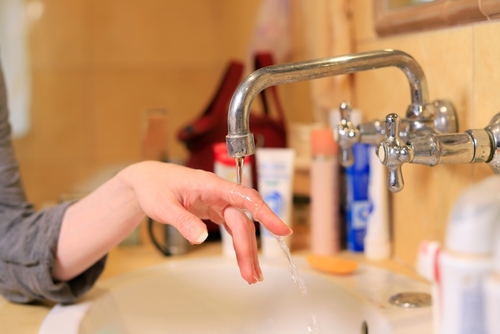




Quick Answer: Low water pressure in your entire house is usually caused by a partially closed main shut-off valve, corroded galvanized supply pipes, a failing pressure regulator, or mineral buildup restricting flow. Start by checking that the main shut-off valve is fully open and that no other valves were partially closed during recent work. If the pressure has been declining gradually over months, corroded pipes or hard water buildup are the most likely causes, and you will need a licensed plumber to evaluate whether a water line replacement is necessary.
Low water pressure is one of those problems that starts as a minor annoyance and slowly becomes unbearable. You adjust your routine around it, buy a “high pressure” showerhead, and tell yourself it is fine. But the pressure keeps dropping because the cause is getting worse. Here is how to figure out what is going on and what to do about it.
Check the Obvious First
Before you call a plumber, there are several things you can check in under ten minutes.
Make sure the main shut-off valve is fully open. If any work was done on your plumbing recently (even a simple faucet replacement), the valve may have been partially closed and not fully reopened. In most Los Angeles homes, the main valve is near the front property line close to the meter. Turn it counterclockwise until it stops.
Check the pressure regulator if your home has one. The regulator is a bell-shaped device on the main supply line, usually near where the pipe enters the house. Regulators can fail in the closed direction, restricting pressure to the entire home. If the regulator feels loose or you cannot adjust it, it needs replacing.
Test whether the problem is isolated or whole-house. Run water at multiple fixtures simultaneously. If only one fixture has low pressure, the issue is local to that fixture (a clogged aerator, a partially closed supply valve, or a kinked supply line). If every fixture is weak, the problem is in the main supply line or the pipes feeding the house.
Corroded Galvanized Pipes: The Most Common Cause in Older LA Homes
If your Los Angeles home was built before the mid-1970s and the water pressure has been declining gradually over months or years, corroded galvanized steel supply pipes are the most likely cause. We have covered this problem extensively in our guides on water line replacement in Glendale and whole-house repiping in Los Angeles.
Galvanized pipes corrode from the inside out. The zinc coating wears away, the steel begins to rust, and mineral deposits from LA’s hard water accumulate on the rough interior surface. Over decades, a pipe with a 3/4-inch interior diameter can narrow to the equivalent of a 1/4-inch opening. No amount of valve adjustment can fix a pipe that is clogged with corrosion from the inside.
A plumber can confirm galvanized pipes by inspecting the visible sections in your basement, crawl space, or under sinks. If the exposed pipes look rough, flaky, or discolored, the concealed sections are in the same condition or worse. The permanent fix is a full repipe with copper or PEX, which restores water pressure to what it should be and eliminates the signs of a burst pipe that come with severely corroded supply lines.
Hard Water Mineral Buildup
Even in homes with copper supply lines, LA’s hard water deposits calcium and magnesium inside the pipes and fixtures over time. The buildup is particularly heavy at valves, fittings, and fixture connections where the flow changes direction. The LADWP water supply consistently tests in the hard range, and areas served by Glendale Water & Power are classified as very hard.
Start with the easiest fix: remove the aerators from your faucets and clean them. Aerators are small screens at the tip of the faucet that mix air into the water stream. They catch mineral deposits and can become significantly clogged. If cleaning the aerators restores pressure at individual fixtures, mineral buildup is the issue and a whole-house solution like hard water treatment may be worth considering.
If cleaning aerators does not help, the buildup is deeper in the system, possibly inside supply valves or the hot water lines coming from your water heater. Sediment buildup inside the water heater tank can also restrict hot water flow specifically. We have covered how to prevent sediment buildup and how to flush your water heater in detail.
Leaks Stealing Pressure
A leak anywhere in your supply system diverts water away from your fixtures. A small leak under a slab, inside a wall, or underground between the meter and the house can reduce pressure throughout the home without producing visible water damage for weeks or months.
If your water bill has increased without a change in usage, a hidden leak is likely. We have written about how to find an underground water leak and slab leak detection in Los Angeles. Both of these conditions can present as low water pressure before any other symptoms appear.
Municipal Supply Issues
Occasionally, the problem is not inside your home at all. LADWP or your local water utility may be performing maintenance, flushing hydrants, or dealing with a main break in your area. Check with your utility before assuming the problem is on your side. If neighbors on your street are also experiencing low pressure, the issue is municipal and will resolve once the utility completes their work.
If the pressure is consistently low at the meter (your plumber can test this), the issue may be an undersized service line from the main to your meter. This is more common in older neighborhoods where the original service connection was sized for a much smaller home. Upgrading the service line requires coordination between your plumber and the water utility.
Get a Professional Diagnosis
If the DIY checks above do not resolve the issue, a plumber can perform a pressure test at the meter, at the point of entry, and at individual fixtures to pinpoint exactly where the pressure is dropping. That diagnostic information determines whether you need a valve replacement, a pressure regulator replacement, or a water line replacement.
Contact Papa’s Plumbing for a water pressure evaluation anywhere in the Los Angeles area. We serve homeowners in Valley Glen, Toluca Lake, Encino, Chatsworth, and all surrounding neighborhoods.
Frequently Asked Questions
Why is my water pressure low only in the morning? High demand periods in your neighborhood (typically 6 to 9 AM) can temporarily reduce municipal supply pressure. If the problem only occurs during peak hours, the issue is likely on the utility side. If it happens at all hours, the cause is inside your home.
Can a water heater cause low water pressure? Yes. A water heater full of sediment restricts hot water flow, causing noticeably lower pressure at hot water taps compared to cold. If the pressure difference is only on the hot side, your water heater needs flushing or service.
How much does it cost to fix low water pressure? A pressure regulator replacement runs $250 to $500 installed. If the cause is corroded galvanized pipes, a whole-house repipe costs $4,000 to $15,000 depending on the material and home size. A simple valve repair may be under $200.
Will a booster pump fix low water pressure? A booster pump can help if the municipal supply pressure to your property is low, but it will not fix pressure loss caused by corroded or restricted pipes. Boosting pressure into pipes that are clogged with buildup just creates more stress on the weak points and increases the risk of leaks.