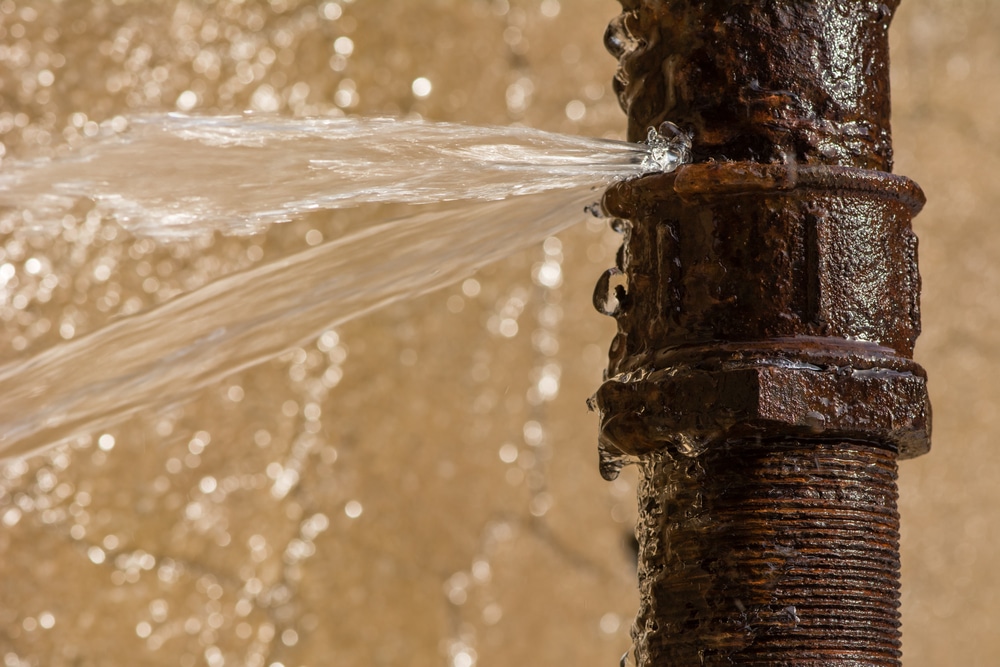




If your Glendale home was built before the mid-1970s, there’s a strong chance the water supply lines running through your walls and under your foundation are original galvanized steel. That material has a useful life of about 40 to 60 years — which means thousands of Glendale homes are now living on borrowed time with pipes that are corroding from the inside out. Here’s what happens when galvanized lines deteriorate, how to tell if yours are failing, and what a water line replacement involves.
Why Galvanized Pipes Fail in Glendale
Galvanized steel pipes were the standard for residential water supply lines from roughly the 1930s through the 1970s. The pipes are coated with a layer of zinc to resist corrosion, but that zinc layer wears away over decades — and once it does, the bare steel begins to rust internally.
In Glendale, two factors accelerate this process. First, Glendale Water & Power reports that the city’s water supply is classified as very hard, averaging over 12 grains per gallon of dissolved calcium and magnesium. That mineral content deposits inside the pipes alongside the rust, creating layers of buildup that progressively narrow the interior diameter. Second, approximately 70 percent of Glendale’s water comes from the Metropolitan Water District, with the primary source being Colorado River water — which is among the hardest water supplies in the western United States.
The result is that galvanized pipes in Glendale homes often deteriorate faster than the same pipes would in cities with softer water. A pipe that might last 60 years in Portland could be severely restricted at 45 years in Glendale.
Signs Your Water Lines Are Failing
Galvanized pipe failure is gradual, which makes it easy to dismiss the early symptoms as normal quirks of an older home. But these are the signals that your water supply lines are reaching end of life.
Low water pressure throughout the house is the most common first symptom. If you notice that running two fixtures at the same time causes a noticeable pressure drop — the shower weakens when someone turns on the kitchen faucet — internal pipe corrosion is the likely culprit. The buildup has narrowed the pipe to the point where it can’t deliver adequate flow.
Discolored water when you first turn on a faucet in the morning, especially a brownish or rust-colored tint, means the interior of the pipe is actively corroding and rust particles are flaking into the water stream. This is more than an aesthetic issue — the Environmental Protection Agency notes that corroding galvanized pipes can also leach lead into drinking water if the original installation used lead solder or if the galvanized coating contained lead.
Frequent pinhole leaks in supply lines, especially in walls or under cabinets, indicate that the pipe walls have thinned to the point of failure. Patching individual leaks in galvanized pipe is a temporary fix — if one section has corroded through, the rest of the pipe is in similar condition.
Visible corrosion or flaking on exposed galvanized pipes — in the basement, crawl space, or under sinks — confirms the zinc coating has failed. If the exposed sections look rough, discolored, or are producing white or greenish mineral deposits at the joints, the concealed sections are in the same condition or worse.
Repiping Options for Glendale Homes
When galvanized pipes reach the point of failure, the recommended fix is a full repipe — replacing all the supply lines in the home with modern materials. The two most common replacement materials are copper and PEX (cross-linked polyethylene).
Copper has been the gold standard for residential water supply lines for decades. It’s durable, resistant to corrosion, and has a proven track record that extends well beyond 50 years. Copper is the preferred material when local codes require it or when the homeowner wants the longest possible lifespan. The tradeoff is cost — copper repiping is more labor-intensive and the material itself is more expensive than PEX.
PEX tubing has become increasingly popular for whole-house repiping because it’s flexible, corrosion-resistant, and significantly faster to install. PEX can be routed through walls with fewer fittings and connections, which means less time opening up walls and less patching afterward. It’s approved by the International Association of Plumbing and Mechanical Officials and meets all California plumbing code requirements for residential water supply.
Your plumber will recommend the material based on your home’s specific layout, your budget, and any requirements from the City of Glendale Building and Safety Division, which oversees permits for repiping work. A building permit is required for a whole-house repipe in Glendale, and the work must pass inspection.
What the Process Looks Like
A full repipe of a typical Glendale home — two bathrooms, kitchen, laundry, and outdoor hose bibs — generally takes two to three days. The plumber will map out the new pipe routing, open small access points in walls and ceilings as needed, run the new lines, connect them to your existing fixtures, and remove or abandon the old galvanized pipes.
Water is typically off for portions of each day during the work but restored by the end of each workday. Once the new lines are in and tested, the plumber will patch the access points and the work passes final inspection from the city.
If only a portion of your system is galvanized — for example, the main supply line from the meter to the house is galvanized but the interior lines were already upgraded — a partial water line replacement of just the affected section may be sufficient. Your plumber can determine the scope by inspecting the visible pipe and testing water pressure and flow at multiple points.
Don’t Wait for a Pipe to Burst
A galvanized water line that’s been corroding for 50 years isn’t going to improve. The buildup will continue restricting flow, the pipe walls will continue thinning, and eventually you’ll have a failure that causes real water damage. Getting ahead of it with a planned repipe is dramatically less expensive and less disruptive than an emergency replacement after a burst pipe floods your home.
If your Glendale home has low water pressure, discolored water, or original galvanized plumbing, contact Papa’s Plumbing for an evaluation. We’ll tell you what you’ve got, how much life it has left, and what your replacement options look like — straight answers, no pressure.