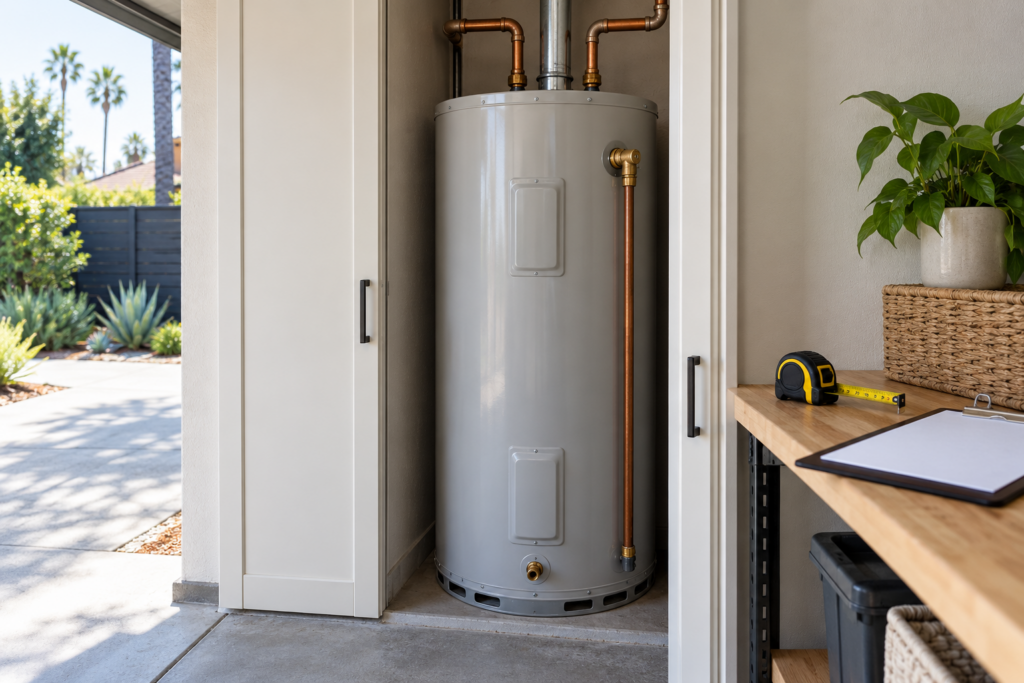




A water heater replacement quote should identify the proposed equipment and the work needed to install it correctly in your home. That includes capacity, fuel and utility requirements, venting where applicable, plumbing connections, access, removal, permits and completion checks.
Two quotes for a similar water heater can cover different installations. One may assume existing connections and venting can be reused; another may include changes that the new model requires. Ask for those assumptions to be explained before comparing the totals.
Confirm That Replacement Solves the Actual Problem
Unreliable hot water can come from the heater, its supply, mixing controls or other conditions. Replacement should follow a diagnosis. A leak at a valve or connection is different from a confirmed leak through the storage tank itself.
Papa’s Plumbing provides water heater repair and replacement in Los Angeles. Ask whether a defined repair remains reasonable and what finding supports replacement when that is recommended.
Name the Proposed Model and Performance
The quote should name the equipment or provide enough specifications to identify what will be installed. Tank volume alone does not describe performance; recovery and the household’s pattern of hot-water use also matter.
For a storage heater, ask how the proposed capacity fits the busiest period of use. For a tankless model, ask how simultaneous fixtures and the required temperature rise affect usable output.
Describe showers, laundry and dishwasher use that overlap. A household that needs two showers at once presents a different demand from one that spaces them apart. The recommendation should match those needs rather than a simple larger-is-better assumption.
Distinguish a Similar Replacement From a Conversion
Replacing a heater with a compatible model in the same location is different from changing the fuel, moving the unit or converting between storage and tankless equipment. These changes can affect piping, utilities, venting, drainage and space requirements.
Ask which existing components were checked and which will be replaced. The presence of an existing connection does not establish that it is suitable for the new equipment.
If you are still weighing whether to repair or replace, Papa’s Plumbing discusses water heater replacement decisions. Once replacement is selected, compare the specific installation scope separately from that decision.
Clarify Gas or Electrical Work
A gas model needs a suitable fuel supply for its specifications and the connected system. An electric model needs a suitable electrical supply. A new heater that looks similar can have requirements different from the unit being removed.
Ask who evaluates the existing supply and who performs any required changes. Electrical circuit or panel work may need a qualified electrician. The quote should identify coordination and exclusions rather than leave them as an unexpected separate job.
Do not open a panel, disconnect wiring, change a gas valve or test for leaks yourself to help compare proposals. Report accessible model information and let qualified professionals assess the installation.
Include Venting and Combustion Requirements
Gas water heaters use different venting arrangements depending on the model. The installer must determine whether the existing vent system and installation conditions meet the new equipment’s requirements.
Ask whether the proposal assumes reuse, includes a new vent route or requires changes at a termination. The assessment should consider the full vent path and any shared equipment, not only the connector visible above the tank.
If the project changes the equipment category or location, ask how that affects combustion-air and venting requirements. Do not accept a universal claim that a vent can always be reused because the old heater worked there.
Put Plumbing and Safety Components in the Scope
The proposal should identify which connections and required safety components are new, which remain and how their suitability is checked. Installation requirements depend on the model and applicable rules; ask for the work to be described for your home.
- Hot and cold supply connections and accessible shutoff arrangements.
- The temperature-and-pressure relief arrangement for the selected model.
- The relief discharge path and any required corrections.
- A drain pan and its drainage where applicable.
- Thermal expansion control where the system requires it.
- The support or restraint appropriate to the installation.
- Condensate handling where the selected equipment produces it.
- Space and access for servicing the installed equipment.
Do not interpret this list as a do-it-yourself installation specification. The contractor should identify what applies to the selected model and explain any site changes needed to meet the relevant requirements.
Account for Access and Removal
A water heater in an open garage is different from one behind a narrow door, in a small closet or on an upper floor. Ask how the old unit will be removed and whether the replacement fits the route and the service space.
The quote should state whether draining, disconnecting, removal and disposal of the old heater are included. Ask whether anything else must be moved or altered for access.
Tell the contractor about stairs, parking limitations, fragile flooring and doors that limit the route. Address protection and cleanup before work starts so the installation plan reflects the real space.
Identify Permits and Inspections
Permit and inspection requirements depend on the address and work. Ask the contractor to identify the requirements that apply and clarify who arranges them and whether associated costs are included.
A proposal should also explain whether an inspection affects completion timing or access. Do not assume that a general statement about installation includes every applicable approval step.
Ask What the Completion Check Includes
A replacement is complete when the appropriate start-up and installation checks have been performed, not simply when the new tank is standing in place. Ask what the contractor will verify and explain at handover.
- The correct equipment was installed in the agreed location.
- The new connections were checked using appropriate methods.
- The unit was started according to its manufacturer’s instructions.
- Relevant utility and venting conditions were verified.
- Hot-water operation and accessible controls were explained.
- Required inspections were arranged or completed as applicable.
- Equipment documents and maintenance requirements were provided.
- Any remaining finish work or separate coordination was identified.
Ask where the accessible shutoff is and what to do if leakage or an error appears later. Keep the equipment information and installer contact details in a place you can reach without opening the appliance.
Compare Warranty Terms Without Assumptions
A manufacturer’s equipment warranty and a contractor’s installation coverage are separate terms. Ask for the actual documents and what they require, including registration or maintenance when relevant.
Do not assume that every part, service visit or related property repair is covered. Written terms are more useful than a general statement that the installation is guaranteed.
Plan the Hot-Water Interruption
Ask when the existing unit will be taken out of service and when usable hot water is expected. Equipment availability, access, utility changes and inspection needs can affect the sequence.
Tell the contractor about household needs and agree on how delays or additional findings will be communicated. Avoid planning around a universal promise that all replacements can be finished within a fixed number of hours.
Common Questions About Replacement Quotes
Does the quote need an exact model?
An exact model or clearly defined equivalent specifications make proposals easier to compare. Ask how any substitution will be approved and whether it changes performance, connections or installation work.
Can the existing vent always be reused?
No. The installer should assess it against the new model’s requirements and the actual route and connected equipment. Reuse is a conclusion from that evaluation, not a default assumption.
Is haul-away normally included?
It varies by proposal. Ask whether draining, removal and disposal are included, and whether access limitations create additional work. The written scope should settle the question.
Will a larger tank fix every hot-water problem?
No. The cause may involve demand, mixing, recovery, piping or other conditions. Sizing should follow the household’s needs and a diagnosis of the existing problem.
Does a tankless conversion use the same connections?
It may require changes to fuel or electrical supply, venting, mounting, condensate handling and service access. Ask for those requirements to be evaluated before selecting equipment.
What if additional work is found after removal?
Ask for the condition and the proposed change to be explained in writing before you approve it. Keep the approved change with the original scope so the final installation record is clear.
Discuss the Complete Replacement Scope With Papa’s Plumbing
For water heater replacement planning in Los Angeles, call Papa’s Plumbing Inc. at (626) 243-3689. Ask for equipment, installation requirements, access, removal and completion checks to be defined so you can compare the whole project.