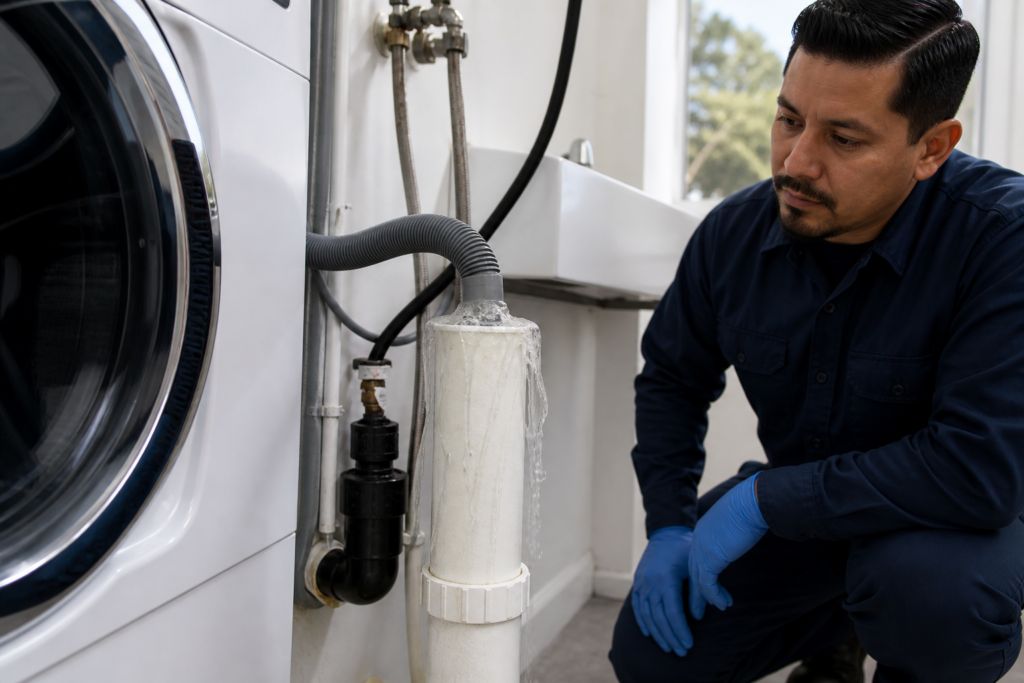




A washing-machine drain usually overflows because the standpipe or connected drain cannot carry away water as quickly as the washer pumps it out. A partial restriction in the laundry branch is common, but a deeper shared-drain problem, vent issue, or unsuitable hose and standpipe arrangement can create a similar symptom.
Stop the washer with its normal controls as soon as water rises from the standpipe. Do not start another drain or spin cycle to test it. Keep people away from the wet floor, and do not touch the washer plug, outlet, or electrical panel if water has reached electrical equipment.
Why the Overflow Happens During Pump-Out
A washer releases a concentrated volume of water in a short time. A drain that seems quiet between loads may still be partly restricted by lint, detergent residue, soil, scale, or other buildup. When the washer pump sends water into that narrowed path faster than the pipe can accept it, the water rises inside the standpipe and spills over the rim.
The timing matters. Water appearing only when the washer drains points toward the discharge path, but it does not identify the exact blockage location by itself. The restriction may be close to the standpipe trap, farther along the laundry branch, or in a shared drain that also serves another fixture.
Signs the Restriction May Be in the Laundry Branch
A local laundry-drain problem becomes more likely when the overflow stays behind the washer and other fixtures behave normally. Useful clues include:
- Water rises from the standpipe within seconds of pump-out.
- A nearby laundry sink drains normally when the washer is not running.
- Toilets, showers, tubs, and sinks elsewhere in the home do not gurgle or back up.
- The overflow began gradually, after several slow or noisy drain cycles.
- Lint or detergent residue is visible around the standpipe opening.
These observations can narrow the inspection, but they do not prove the trap or branch is the only problem. A deeper restriction can first reveal itself at the lowest or least protected opening.
Signs the Problem May Be Deeper
Watch what happens at other fixtures without deliberately adding more water. A shared-drain or sewer restriction becomes more likely when:
- A toilet gurgles as the washer pumps out.
- Water appears in a tub, shower, floor drain, or laundry sink.
- Several fixtures have become slow around the same time.
- Dirty water returns through a lower drain.
- The washer overflow follows earlier recurring backups elsewhere in the home.
- Water remains at an exterior cleanout or another low point.
A toilet that gurgles when the washing machine drains can indicate that the fast discharge is displacing air through a restricted shared line or vent path. When multiple fixtures react, do not treat the condition as a washer-only problem.
The Hose and Standpipe Arrangement Can Affect Drainage
The corrugated washer hose normally bends into a vertical standpipe. The hose should not create an airtight seal at the opening, and it should not be pushed so far down that its position interferes with proper drainage. Standpipe height, diameter, trap configuration, and venting also affect how the discharge behaves.
Look only at what is visible without moving the appliance or connection. Note whether the hose is sharply kinked, crushed, loose, sealed tightly into the opening, or inserted unusually deep. Do not pull it out while the washer contains water. A hose can release a sudden stream onto the floor, and changing its position may hide the original condition without correcting the drain restriction.
An installation issue is most relevant when the overflow began immediately after a washer, hose, or laundry connection was changed. A setup that worked for years and then began overflowing more often points toward developing restriction or drainage-system change, although inspection is still needed.
Safe Steps to Take Right Away
Use these steps to limit another spill and give the plumber useful information:
1. **Stop the washer normally.** Pause or cancel the cycle with the appliance controls. Do not select another drain cycle. 2. **Keep the area electrically safe.** Stay off wet flooring around the washer, outlet, cords, or electrical equipment. Do not unplug anything from a wet area. 3. **Contain water only from a dry route.** Place towels or a shallow barrier where you can do so without stepping in wastewater or reaching behind energized equipment. 4. **Avoid other nearby drains.** Do not run a laundry sink or another fixture on the suspected branch until the water has receded and the cause is understood. 5. **Record where the water appeared.** Note whether it came over the standpipe rim, leaked from the hose, or surfaced at another drain. 6. **Note other fixture reactions.** Record gurgling, slow drainage, odors, or backup at a toilet, tub, shower, sink, or floor drain. 7. **Take a photo from a safe position.** The hose depth, standpipe opening, water level, and surrounding connections can help the plumber prepare.
Do not pour chemical drain cleaner into the standpipe. Chemicals may remain trapped in the pipe or return with the next overflow, exposing occupants and the plumber to caustic wastewater. Do not disconnect the hose, remove a trap, or insert a cable without the correct diagnosis and safe access.
Why Repeating the Cycle Is a Poor Test
A standpipe can drain down slowly after the washer stops, making the problem appear to have cleared. Starting another cycle sends another pumped volume into the same restricted path. The second overflow may spread farther, reach electrical components, or introduce more contaminated water into the room.
One clearly observed event is enough. Tell the plumber how far into the drain cycle the water rose, how quickly it receded, and whether any other fixture reacted. That information is more useful than repeatedly recreating the spill.
What Professional Drain Diagnosis Checks
A plumber can follow the symptom from the standpipe into the connected drain system. Depending on the layout and findings, the inspection may include:
- Checking the visible hose placement and standpipe opening.
- Confirming whether the trap and branch can accept the washer’s discharge rate.
- Looking for lint, detergent residue, scale, or other restriction in the laundry path.
- Comparing the laundry branch with nearby fixture behavior.
- Identifying whether a vent or shared-drain condition contributes to the overflow.
- Locating appropriate drain access without dismantling wet connections unnecessarily.
- Selecting cleaning equipment that fits the pipe, access point, and suspected material.
- Testing flow safely after the restriction is addressed.
The correction should match the finding. Repositioning a hose will not remove buildup inside a branch drain. Cleaning only the standpipe will not correct a deeper shared-line restriction. Sewer equipment is not automatically the first tool for every laundry overflow.
Papa’s Plumbing provides drain cleaning in Los Angeles when a washer standpipe, laundry branch, or connected drain needs professional diagnosis and clearing.
Reducing the Chance of Another Laundry Drain Problem
After the current cause is corrected, routine habits can reduce lint and detergent accumulation. Use the appliance manufacturer’s recommended detergent type and amount. Heavy suds do not improve cleaning and can leave more residue in the drainage path. Follow the washer’s load limits, and clean any manufacturer-provided lint filter on schedule.
An approved lint-capture method may help in some installations, but the washer manufacturer and plumbing arrangement should guide that choice. A device that restricts discharge or is not maintained can create a different problem. Papa’s Plumbing’s laundry drain maintenance information covers preventive habits without replacing diagnosis of an active overflow.
Recurring slow discharge, gurgling, or water rising near the standpipe deserves attention before the next full spill. Prevention cannot restore a drain that is already materially restricted.
When to Request Prompt Help
Request prompt plumbing help when wastewater continues to rise, the overflow repeats, more than one fixture reacts, or dirty water appears at a tub, shower, floor drain, or sink. Keep clear and seek appropriate electrical guidance when water reaches a receptacle, power cord, appliance connection, or electrical panel.
An urgent response is also appropriate when the source may contain sewage, occupants cannot avoid the wet area, or the washer cannot be stopped with its normal controls. Do not handle contaminated water without proper protection and cleanup procedures.
Frequently Asked Questions
Why does the standpipe overflow even though it drains afterward?
The pipe may accept water slowly but not at the washer pump’s discharge rate. Once the pump stops, the backed-up water can recede through the remaining opening. That does not mean the restriction is gone.
Is the washing machine itself causing the overflow?
The washer provides the fast flow that reveals the condition, but the cause may be in the standpipe, trap, laundry branch, vent, hose arrangement, or deeper shared drain. Water leaking from the appliance cabinet or hose connection is a different symptom from water rising over the standpipe rim.
Can too much detergent make the drain overflow?
Excess detergent can contribute residue and heavy suds, but a single overflow should not be blamed on detergent without checking the drain path and setup. A partial restriction or configuration issue may still be present.
Should I snake the washing-machine drain myself?
Avoid inserting a cable when the pipe layout, access, material, and blockage location are unknown. A cable can damage a trap or pipe, become stuck, or push material deeper. Professional diagnosis helps choose the correct access point and equipment.
Does a washer overflow mean the main sewer line is clogged?
Not necessarily. A local laundry-branch restriction is possible when every other fixture works normally. Multiple affected fixtures, toilet gurgling, or backup at a lower drain makes a shared-line problem more likely.
Schedule Washing-Machine Drain Service in Los Angeles
If water rises from the washer standpipe, stop the cycle and avoid another pump-out test. Share where the water appeared, how quickly it rose and receded, whether other fixtures reacted, and whether the hose or washer was recently changed. Papa’s Plumbing can inspect the laundry discharge path and determine whether the standpipe, branch, or deeper connected drain needs cleaning or correction.