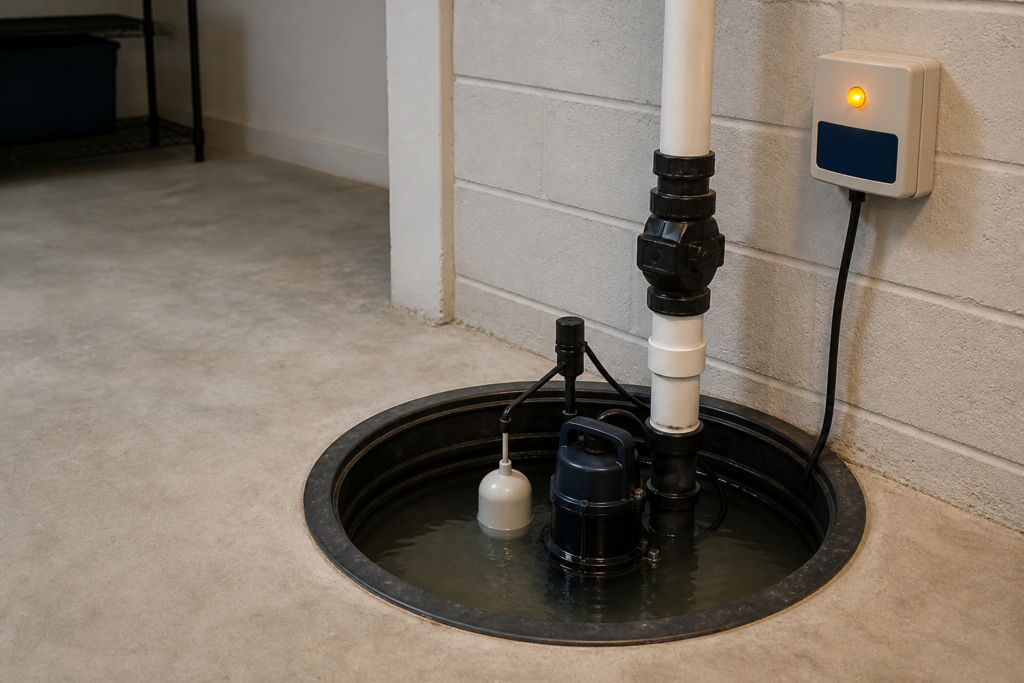




A sump-pump alarm usually means the system has detected a condition that needs attention. Depending on the equipment, the alarm may respond to water rising above a set level, loss of power, a weak backup battery, a pump that is not keeping up, or a problem within the alarm unit itself.
Treat the sound as a warning, not a diagnosis. Stay on a dry surface and look from a safe distance. If water is high or rising, the pump is silent, or the floor or electrical connection is wet, keep clear and request prompt help. Do not reach into the pit, touch a cord or receptacle, lift the float, or open an electrical control.
The Alarm Is Warning You About a Condition
Many sump systems use a separate alarm float or water-level sensor above the pump’s normal starting point. If the water reaches that sensor, the alarm sounds because the pump may not be removing water quickly enough. Other alarms monitor power, a backup pump, or a battery.
The exact meaning depends on the installed system. A steady tone, recurring beep, indicator light, or control-panel message may have a different meaning from one model to another. If the manufacturer’s label and instructions are visible from a dry position, note the model and indicator state for the plumber. Do not open the control or remove a cover to find them.
Silencing an alarm does not lower the water or restore a failed pump. Even when the sound stops, the underlying condition may remain.
High Water Is the Most Urgent Possibility
Look at the basin only if you can do so without stepping near water or exposed electrical equipment. Water near the top of the pit, above the normal waterline, or continuing to rise supports a high-water condition. The primary pump may be unable to start, may be running without enough capacity, or may be unable to discharge the water.
Recent heavy rain can increase inflow. A burst or leaking pipe can also add water near the foundation. The alarm alone cannot identify the source.
Move people and stored belongings away from the affected area using a dry route. If water is approaching a receptacle, appliance, extension cord, or pump connection, do not enter the area to unplug anything. Water and electricity require qualified emergency guidance.
The Pump May Be Off or Unable to Start
If the water is high and you do not hear the pump, the system may have lost power, the float may be obstructed, the motor may have failed, or a control may not be calling for operation. A tripped breaker or GFCI can also interrupt power, but repeated electrical interruption can signal a wet connection, damaged cord, motor problem, or circuit issue.
Do not repeatedly reset electrical protection or handle a wet plug. One observation that the pump is silent, along with the water level and indicator state, is enough to report. Repeated attempts can increase electrical risk or worsen equipment damage.
General sump-pump maintenance recommendations can help with routine planning, but an active alarm with high water needs condition-led diagnosis.
A Running Pump May Still Trigger the Alarm
Hearing the motor does not prove that water is leaving the basin. A blocked intake, damaged pump, restricted discharge line, frozen or obstructed outlet, stuck check valve, or air-lock condition may let the motor run while the water remains high. The pump may also be moving water but not fast enough for the current inflow.
From a safe exterior location, you may be able to observe whether the discharge outlet is releasing water. Do not put a hand, tool, or hose into the outlet, and do not disconnect a pipe to test the flow. Note whether the pump sound continues, starts and stops, or changes while the alarm remains active.
Power and Battery Warnings Can Sound Before Water Rises
A backup controller may alarm after a power interruption, disconnected power source, weak battery, failed charging circuit, or unsuccessful self-test. The basin can still look normal when the warning begins.
Do not assume a quiet, low-water pit makes the alarm harmless. A battery or power warning can mean the backup system may not be ready for the next outage or storm. Record any visible power, battery, or fault indicator without touching the equipment.
Battery systems can contain corrosive material and release gas. Do not open a battery case, move terminals, add fluid, or connect a charger unless a qualified person and the manufacturer procedure establish that it is safe.
The Alarm Sensor or Controller Can Also Be the Problem
An alarm float can become obstructed, a sensor can shift, or a controller can develop a fault. Condensation, corrosion, damaged wiring, or an old backup battery may also produce intermittent beeping. These are possibilities for inspection, not conclusions based on sound alone.
An alarm that stops and then returns deserves attention. Note when it happens, how long it lasts, whether rain or a power interruption occurred, and whether the pump ran at the same time. Do not repeatedly move the float or reset the unit to recreate the warning.
Make Sure You Know What Kind of Basin It Is
Some covered basins contain sewage-ejector equipment rather than a groundwater sump pump. A sewage-ejector basin may have a sealed lid, vent connection, and different alarm purpose. If you are uncertain, do not remove the cover or lean over the opening. Keep clear of wastewater and request qualified plumbing service.
The existing explanation of how sump pumps and their connected components work can help you identify familiar parts from a distance. It should not be used to dismantle or test an alarmed system.
Safe Details to Record Before Calling
Useful observations help a plumber prepare without asking you to touch the system:
- Whether the alarm is steady, intermittent, or recurring.
- The color and pattern of any visible indicator light.
- Whether the basin water is low, near the normal line, or high and rising.
- Whether the primary or backup pump can be heard.
- Whether water is visibly leaving the exterior discharge point from a safe location.
- Whether the warning followed heavy rain, a power outage, electrical work, or a recent repair.
- Whether the floor, cord, receptacle, or control area is wet.
- The visible manufacturer and model, if readable without moving equipment.
Do not wait to collect every detail when water is rising. Safety and prompt service matter more than a complete list.
What a Plumber Checks
A professional inspection can identify what triggered the alarm and whether the water-removal system is ready to operate. The checks may include:
- Comparing the alarm sensor level with the current basin level.
- Verifying the primary pump and any backup pump under safe conditions.
- Checking the float, intake, check valve, discharge pipe, and exterior outlet.
- Confirming the controller, power supply, electrical protection, charger, and battery condition.
- Looking for excessive inflow, a restricted outlet, or water returning to the basin.
- Determining whether the basin serves groundwater or wastewater.
The correction should match the finding. Replacing an alarm will not clear a blocked discharge line. Replacing a pump will not fix a failed charger. Resetting a controller will not reduce excessive inflow.
Papa’s Plumbing provides sump-pump repair and replacement in Los Angeles for homeowners who need the pump, alarm, backup equipment, and discharge route evaluated together.
When to Request Prompt Sump-Pump Service
Call promptly when water is high or rising, the pump is not running, the alarm returns after being acknowledged according to the manufacturer’s instructions, or the floor and electrical area are wet. Service is also appropriate when the warning follows a power loss, the backup battery cannot maintain readiness, the discharge flow appears absent, or you cannot tell whether the basin handles groundwater or sewage.
An alarm with a normal water level may be less urgent than active flooding, but it still deserves diagnosis. The warning may be identifying a power or backup-system condition before the next storm.
Frequently Asked Questions
Can I turn off a sump-pump alarm?
Follow only the installed manufacturer’s safe instructions from a dry position. Some controls provide a silence or acknowledge function, but using it does not correct high water, pump failure, power loss, or a battery problem. If the cause is uncertain, keep the warning active and request service.
Why is the alarm sounding when the water is low?
The alarm may monitor power, battery condition, a backup pump, or a control fault rather than only water level. A shifted or obstructed sensor is another possibility. The indicator pattern and a professional inspection are needed to identify the cause.
Why is the pump running while the alarm stays on?
The pump may not be moving water, may be discharging too slowly, or may be unable to keep up with inflow. A restricted pipe, outlet problem, check-valve issue, pump damage, or unusually fast inflow can leave water above the alarm sensor. Do not disconnect piping or reach into the basin to test it.
Will the alarm stop after the rain ends?
It may stop after water recedes, but that does not prove the system is functioning normally. Record the water level, pump behavior, and alarm timing. Recurring warnings after storms warrant inspection before the next heavy inflow event.
Is a beeping battery backup dangerous?
The beep may indicate low charge, lost power, failed testing, or an equipment fault. Do not open the battery, touch terminals, or connect an unapproved charger. Keep the area ventilated and dry, and have the backup system checked.
Schedule Sump-Pump Alarm Service in Los Angeles
If your sump-pump alarm is sounding, share the visible water level, pump sound, indicator state, recent weather, and any power interruption with Papa’s Plumbing. When water is high, the pump is silent, or electrical equipment is wet, keep clear of the area and request prompt professional help.