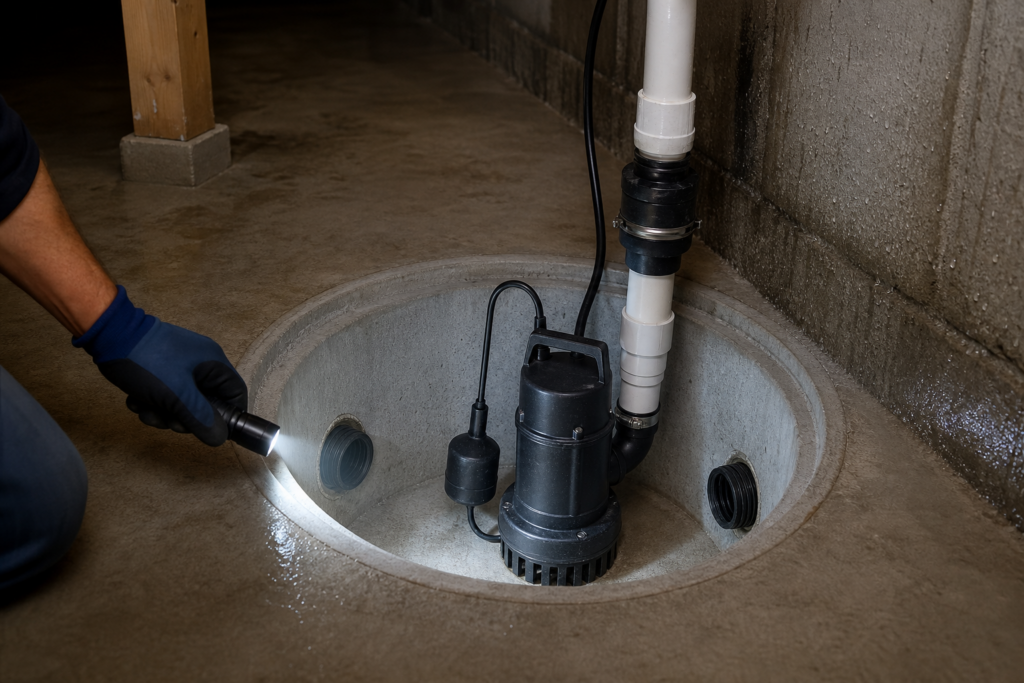




A sump pit can stay dry after heavy rain without anything being broken. Rainwater must soak into the soil, reach the elevation of the collection system, and then travel through a drain or inlet before it enters the basin. Good grading, gutters, dry soil below the surface, a low groundwater table, or a short storm can keep the pit dry.
The condition deserves inspection when water is pooling near the foundation, the crawlspace or basement is damp, or a known drainage inlet never delivers water to the basin. Those patterns can point to a blocked, disconnected, damaged, or poorly graded collection path. The pump cannot protect the home from water that never reaches the pit.
Rainfall and Groundwater Are Not the Same Thing
A sump basin normally collects groundwater or subsurface drainage, not every drop that lands on the roof or yard. Surface water should first move away through roof drains, gutters, downspouts, swales, and soil grading. Only water that infiltrates and reaches the collection route can enter the pit.
That process can take hours or days. Sandy soil may drain quickly, while clay soil can hold water closer to the surface. A hillside property may shed water downhill before it reaches the foundation. A home with effective exterior drainage may have a dry sump pit during storms because the water is being controlled before it becomes a below-grade problem.
When a Dry Sump Basin May Be Normal
A dry basin is usually reassuring when the surrounding area is also dry. Look for the broader pattern rather than focusing only on the pump.
The condition may be normal when:
- The basement or crawlspace floor and foundation walls remain dry.
- Soil next to the foundation is not saturated or holding puddles.
- Downspouts carry roof water away from the building.
- The property slopes away from the foundation.
- The storm was brief or followed a long dry period.
- The local groundwater level remains below the collection system.
- The pump has operated during larger or longer storms in the past.
A pump that does not run because no water enters the pit is different from a pump that fails to start while water rises. The second condition requires prompt attention because the basin is already receiving water.
When the Dry Pit Points to a Collection Problem
The most important warning pattern is water appearing around the home while the basin receives nothing. Damp foundation walls, wet soil in the crawlspace, floor seepage, or standing water outside can mean water is taking a route that bypasses the pit.
Possible collection-path conditions include:
- Sediment, roots, or construction debris blocking an inlet or drain.
- A drain line that became disconnected from the basin.
- A crushed, collapsed, or shifted underground section.
- A pipe installed without enough slope to carry water toward the pit.
- A basin set above the elevation where water is collecting.
- An inlet opening sealed, covered, or never connected during earlier work.
- Exterior grading that directs water toward a different part of the foundation.
- A drainage design that does not cover the area where seepage is occurring.
These are inspection possibilities, not conclusions that can be made from a dry pit alone. The basin may have more than one opening, and not every visible opening is necessarily connected to a perimeter or footing drain. A plumber needs to trace the actual route before recommending cleaning, repair, or drainage changes.
Check the Area Around the Foundation
Safe observations outside the basin can reveal whether the system is managing water or missing it. After the rain stops, walk the property only where footing is stable and there is no electrical or flooding hazard.
Note whether downspouts discharge beside the foundation or several feet away. Look for low spots, overflowing gutters, eroded soil, and water trapped against a wall. Indoors, record damp patches, mineral staining, musty odor, peeling paint, or a wet crawlspace area.
The location matters. Water on the opposite side of the home from the basin may never reach that collection point. A photo of each wet area and the dry pit helps a plumber compare the property conditions with the drainage route.
Do not excavate along the foundation or insert rods, hoses, or drain-cleaning chemicals into an unknown inlet. A buried line may be fragile, and forcing material through it can damage the pipe or push a blockage farther into the system.
Make Sure the Pump Is Ready Even When the Pit Is Dry
A dry basin does not confirm whether the pump would work if water arrived. The pump, float switch, power supply, check valve, and discharge route still need periodic evaluation.
Start with a visual check from a dry, stable location. Confirm that the pump sits upright, the float can move without touching the basin wall, and the discharge pipe appears connected. Look for a damaged cord, corrosion, loose fittings, or stains that suggest prior leakage.
Do not reach into the basin while the equipment is connected to power. Do not enter standing water to reach a plug, receptacle, or breaker. If the manufacturer permits a controlled water test, follow its instructions and stop if the pump does not start, the discharge leaks, or water rises unexpectedly. A professional test is safer when the electrical setup, discharge route, or basin condition is uncertain.
Understanding how a sump pump works makes the distinction clearer: the collection system brings water to the basin, the float detects the rising level, and the pump sends that water through the discharge pipe. Failure at any one stage creates a different symptom.
The Basin Inlets Need to Match the Property’s Drainage Route
Some basins receive water through visible side inlets. Others rely on openings below the pump, gravel around the liner, or a connected drainage network that is not obvious from above. Older homes may have been altered more than once, leaving abandoned or partially connected piping.
A plumber can compare the visible inlets with the foundation, low areas, downspout routes, and any known perimeter drains. If access permits, the inspection may identify whether a line is open, holding debris, improperly sloped, or disconnected.
What a Professional Sump-Pump Inspection Checks
A useful inspection follows water from the property to the final discharge point. It should not begin with the assumption that the pump needs replacement simply because the pit is dry.
Depending on the property, the plumber may check:
- Roof-water and surface-drainage conditions near the foundation.
- Wet areas, seepage paths, and the basin’s location and elevation.
- Visible basin inlets and any accessible collection piping.
- Sediment, roots, debris, damaged pipe, or disconnected fittings.
- Whether the basin is deep enough to receive water from the intended route.
- Pump placement, float movement, electrical protection, and test operation.
- Check-valve orientation and discharge-pipe condition.
- Whether discharged water is carried far enough away from the foundation.
- Signs that water returns toward the home or recirculates into the same soil.
The next step should match the verified condition. A blocked accessible inlet may need clearing. A disconnected or collapsed pipe may need focused repair. Poor grading or roof-water discharge may require an exterior drainage correction. If the basin is dry because groundwater never reaches it, the pump may simply be standing by as designed.
Routine sump-pump maintenance remains important even during dry periods. A long inactive interval can hide a stuck float, obstructed intake, failed check valve, or power problem until the next storm brings water into the basin.
Warning Signs That Need Prompt Service
Request prompt help when the pit stays dry while water enters the basement or crawlspace, the foundation wall is actively seeping, or soil beside the home remains saturated. These conditions suggest that the collection route is not controlling water where it is needed.
Other warning signs include:
- Water rising in the basin without the pump starting.
- A pump that hums but does not move water.
- A tripped GFCI or breaker, burning smell, smoke, sparks, or damaged wiring.
- Leakage from a check valve, coupling, or discharge pipe.
- Discharged water pooling beside the foundation.
- A sudden change after excavation, landscaping, foundation work, or drain repair.
- Sediment or roots visible at a basin inlet.
Keep clear of wet electrical areas. Do not continue testing a pump if the water level rises, the discharge leaks, or protective devices trip.
Details to Record Before the Appointment
A few observations can make the inspection more efficient:
- When the rain began and roughly how long it lasted.
- Whether the basin has ever received water or run during a prior storm.
- Which walls, floor areas, or outdoor zones became wet.
- Whether gutters or downspouts overflowed.
- Where roof water discharges relative to the foundation.
- Whether the pit has visible inlets, old water marks, sediment, or debris.
- Whether recent work occurred near the foundation or buried drainage lines.
- Whether the pump can complete a controlled test without leakage or electrical trouble.
Do not diagnose the system from one clue. A dry pit, wet wall, and overflowing downspout together tell a different story than a dry pit in a completely dry crawlspace.
Schedule Sump-Pump Repair in Los Angeles
Papa’s Plumbing provides sump-pump repair and replacement in Los Angeles. If the basin remains dry while water is collecting near or inside the foundation, an inspection can determine whether the issue is the water route, the basin connection, or the pump system itself.
Contact Papa’s Plumbing and share where the water appeared, whether the pit has filled before, and what changed after the latest storm. Those details help keep the diagnosis focused on the exact path water should follow.
Frequently Asked Questions
Should a sump pump run every time it rains?
No. The pump runs only when water reaches the basin and raises the float to its activation level. A brief storm, good surface drainage, or groundwater below the collection system can leave the pit dry.
Can a sump pump be working if the pit is completely dry?
The dry condition can be normal, but it does not prove the pump will operate. The pump and float still need periodic safe testing and inspection so they are ready when water arrives.
Why is my crawlspace wet while the sump pit is dry?
Water may be entering somewhere the collection system does not reach, or an inlet route may be blocked, disconnected, damaged, or poorly graded. The wet area and drainage route should be traced before deciding on a repair.
Can I pour water into the sump pit to test it?
Follow the pump manufacturer’s instructions and test only from a dry, safe location with a verified discharge route. Do not continue if the pump fails to start, water rises unexpectedly, a fitting leaks, or an electrical protection device trips.
Does a dry pit mean I do not need a sump pump?
Not necessarily. The system may be intended for rare high-groundwater or severe-storm conditions. Property elevation, drainage history, below-grade space, and prior water intrusion all matter.