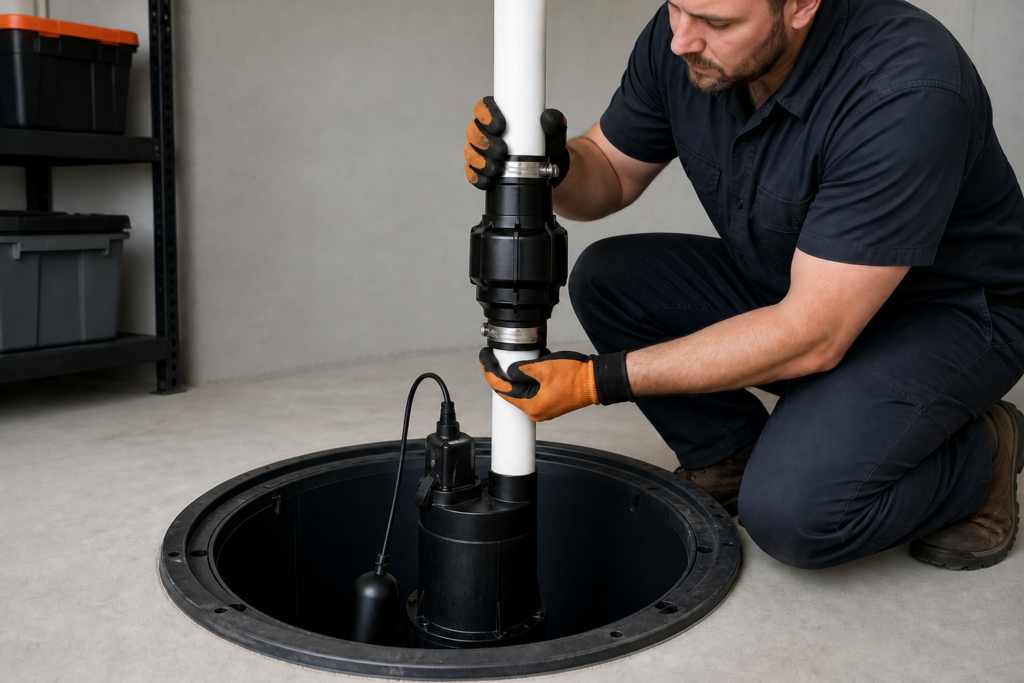




A sump pump that makes one loud bang or thump at the exact moment it shuts off is often reacting to moving water in the discharge pipe. When the motor stops, the water column begins to reverse direction and the check valve closes to keep that water from falling back into the basin. An abrupt valve closure can create a sharp impact, while a loose discharge pipe can amplify the force by striking a wall, floor opening, joist, or basin edge.
The timing is an important clue, but it does not prove the check valve is bad. Valve type, wear, debris, placement, water-column height, discharge-pipe support, pump flow, and nearby fittings can all affect the sound. A plumber can reproduce the cycle under controlled conditions and identify whether the impact comes from inside the valve, from the pipe moving, or from water returning after shutdown.
What the Check Valve Does When the Pump Stops
The sump pump pushes basin water up through the discharge pipe and away from the home. The water in that pipe has weight and momentum. When the motor stops, gravity begins pulling the water column back toward the basin.
An inline check valve is designed to stop that reverse flow. Depending on its design, a flapper, gate, or spring-assisted mechanism moves into the closed position. A properly selected and installed valve should control backflow without allowing a damaging amount of water to return.
Some valve noise is possible during a normal cycle, especially when a long vertical discharge run holds a substantial water column. A new or suddenly louder bang deserves attention because repeated impact can loosen supports and stress joints even if the pump still empties the basin.
Why a Check Valve Can Slam Shut
Valve slam occurs when water begins moving backward before the internal valve closes, then the moving water forces the valve shut. The impact can be heard as a single knock, clap, or thump near the discharge pipe.
Several conditions can make that closure more forceful:
- A worn or slow-moving internal valve component.
- Debris that prevents smooth valve movement.
- Fast water velocity through the discharge pipe.
- A long or high water column above the valve.
- Valve placement that allows more water movement before closure.
- A valve design that closes abruptly under the system’s actual flow.
- A pump and discharge arrangement that moves water faster than the piping can settle quietly.
The sound alone cannot show which condition is present. Replacing a valve without checking flow direction, pipe size, lift, support, and pump requirements may leave the bang unchanged or create a new restriction.
The Pipe May Be Making the Sound, Not the Valve
The water column transfers force into the discharge piping as flow stops. If the pipe is loose, the shutoff pulse can make it jump sideways and strike framing, a wall opening, the basin cover, or another pipe. A valve may be operating normally while poor support turns a small movement into a loud noise.
From a dry location, watch the visible pipe during one normal cycle. Note whether it twists, lifts, or shifts at shutdown. Do not hold the pipe while the pump runs and do not reach over an open basin to feel for movement. A video recorded from a safe distance can capture the timing more reliably than repeated test cycles.
A plumber can inspect hangers, clamps, penetrations, couplings, and clearances. The goal is to support the pipe without forcing it out of alignment or transferring vibration into the building. Adding a random clamp at the loudest spot may not solve the underlying valve or flow condition.
Is the Bang the Same as Water Hammer?
Water hammer describes a pressure wave created when moving water changes speed or direction abruptly. A closing check valve can create a related hydraulic shock in a sump discharge line. Homeowners often use the term for any pipe bang, but not every shutoff noise has the same cause.
A pipe striking framing is a mechanical impact. A worn valve can produce an internal clack. Water falling back can create a rush followed by a thump. Pump vibration may travel through rigid piping and sound louder in another room. These conditions can overlap, so the inspection should follow the sound and movement rather than rely on one label.
Water Returning to the Basin Points to a Different Valve Problem
After the pump stops, look from a safe distance to see whether the basin level stays down. A small change may occur as water below the valve settles. A strong rush of water back into the pit, immediate basin refill, or another pump cycle shortly afterward can mean the valve is not holding as intended.
A failed-open, obstructed, missing, backward, or poorly sealed valve can allow more of the discharge column to fall back. The repeated refill makes the pump cycle more often and can shorten the time available before the next inflow event.
If the motor runs but the basin does not drain, the diagnosis follows a separate path involving the intake, impeller, air lock, check valve, and discharge route. Review the warning signs for a sump pump that runs but does not pump water and stop testing if the water level keeps rising.
Pump Flow and Discharge Layout Can Amplify the Impact
A pump must overcome the vertical lift and friction in its discharge route. Pump capacity, pipe diameter, elbows, valve resistance, and total lift all affect water velocity. A pump that moves water rapidly can create a stronger shutdown event, but loud noise does not automatically mean the pump is oversized.
The system should be evaluated as one connected path. A plumber may compare the installed pump with the basin demand and discharge layout, check whether the pipe diameter and valve match the equipment requirements, and look for unnecessary restrictions or abrupt changes in direction.
Do not drill the pipe, relocate the valve, install a smaller pipe, or add a second valve as a noise experiment. Those changes can reduce capacity, trap air, increase cycling, or create leak points. A quiet or spring-assisted check valve may help in a compatible system, but selection and orientation matter.
Safe Details to Record Before Requesting Service
The most useful observations do not require touching the pump or opening the piping:
- Does the sound happen when the motor starts, while it runs, or exactly when it stops?
- Is it one sharp bang, several knocks, a grinding noise, or a rush of returning water?
- Does the sound seem closest to the check valve, a wall penetration, the basin, or another floor?
- Does the visible discharge pipe move at shutdown?
- Does the basin level stay down, rise slightly, or refill quickly?
- Does the pump restart soon after the bang?
- Is water leaking at a coupling, valve, or pipe joint?
- Did the sound begin after a pump, valve, discharge line, or basin repair?
Record one normal cycle only if the floor is dry, the basin is not near overflow, and the system is not showing an electrical or leak hazard. Routine sump-pump maintenance can catch valve wear, debris, loose components, and discharge trouble before the next heavy inflow.
What Not to Do Around a Banging Sump Pump
Do not reach into the basin, brace the pipe by hand during operation, loosen a clamp, cut the discharge line, or remove the valve while the system is connected to power. Do not pull the pump by its cord or bypass a GFCI to continue testing.
Do not enter standing water to reach the plug or receptacle. If water is near electrical equipment, keep clear and disconnect power only from a dry, safely accessible location. A breaker or GFCI that trips needs its own diagnosis; repeated resets are not a repair.
Do not assume the loudest visible fitting is the source. Vibration can travel through rigid pipe and framing. A change made at the wrong location can hide the noise temporarily while leaving return water, valve wear, or joint stress unresolved.
What a Sump-Pump Inspection Checks
A condition-led inspection begins with the exact sequence: water rises, the float calls for the pump, the basin drains, the motor stops, and the bang occurs. The plumber can then check the components while maintaining electrical and water safety.
Depending on the system, the inspection may include:
- Confirming the pump starts, moves water, and stops at appropriate basin levels.
- Watching the check valve and discharge pipe during shutdown.
- Checking the valve’s orientation, condition, connection points, and movement.
- Looking for debris, wear, leakage, or a valve that allows reverse flow.
- Inspecting pipe hangers, clamps, wall penetrations, couplings, and clearances.
- Comparing the pump, valve, pipe size, vertical lift, and discharge route.
- Checking whether water returns to the basin or causes rapid cycling.
- Listening for motor, impeller, bearing, or vibration noise that occurs before shutdown.
The repair should match the verified condition. It may involve replacing a worn valve, correcting a compatible valve installation, securing the discharge pipe, repairing a leaking joint, clearing a restriction, or addressing a pump and discharge mismatch. A diagnosis prevents a quiet-valve replacement from being used to treat a loose pipe, or a pipe clamp from being used to treat failed backflow control.
When the Bang Needs Prompt Attention
Arrange prompt service if the pipe moves violently, a joint leaks, the valve or pipe visibly separates, the basin refills quickly, the pump restarts repeatedly, or the water level continues rising. Stop using the pump and keep clear if you notice a burning smell, damaged cord, sparks, smoke, a tripped protective device, or water near the receptacle.
A single new bang also deserves evaluation before a heavy inflow period. Repeated impact can worsen a loose support or coupling, and a valve that no longer holds water can make the pump work more often.
Schedule Sump-Pump Repair in Los Angeles
Papa’s Plumbing provides sump-pump repair and replacement in Los Angeles. Note the exact timing of the bang, whether the pipe moves, whether water returns to the basin, and whether the pump restarts. Those details help separate check-valve slam from loose piping, backflow, or a broader pump-and-discharge condition.
Contact Papa’s Plumbing to request an inspection before repeated shutdown impact compromises a joint, support, or reliable drainage.