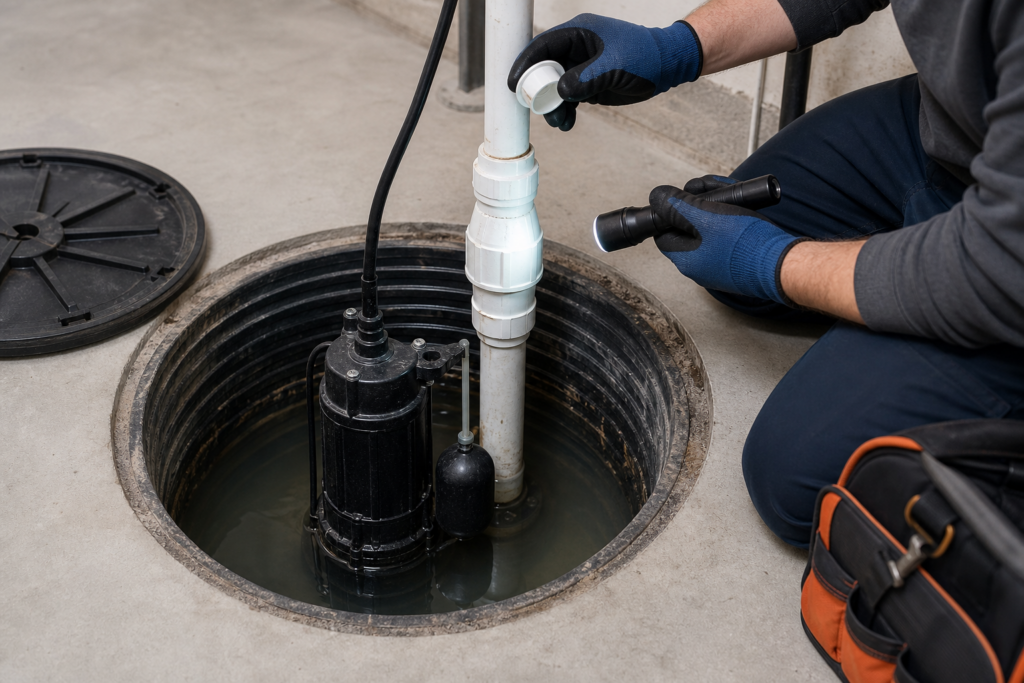




If the sump-pump motor runs but the basin level does not drop, the system has a flow problem. The pump may not be drawing water in, the impeller may not be moving it, or the discharge path may be blocked. A running sound does not mean the property is protected from an overflow.
Watch the water level only from a dry, safe location. Do not reach into the basin or touch the pump, cord, or piping while the unit is connected to power. If the water is approaching the rim, reduce unnecessary water use and arrange professional help before the basin spills.
Make Sure the Pump Is Actually Moving Water
A normal cycle lowers the water level and then stops when the float reaches its shutoff position. If the motor keeps running while the level stays the same, the pump is not creating useful flow. If the level falls and immediately rises again, the check valve may be allowing discharged water to return.
Note what you see and hear: whether the outlet releases water, whether the basin level changes, whether water rushes back after shutdown, and whether the motor hums or sounds unusually rough. Those observations can shorten the diagnostic process.
Debris May Be Blocking the Intake
Water enters through openings around the lower part of a submersible pump. Sediment, small stones, silt, or loose material in the basin can cover those openings. The motor may continue to run even though the impeller cannot receive enough water.
Debris can also jam the impeller. Repeated operation in that condition may overheat the motor or damage internal parts. A plumber can disconnect the system safely, lift the pump, clean the intake, and check whether the impeller still turns and produces adequate flow.
The Float Can Hold the Pump in the Wrong Cycle
The float switch starts the pump when water rises. A tethered float may catch on the basin wall, pipe, cord, or pump body. A vertical float can bind on its guide. When it sticks high, the motor may run continuously even though the system cannot complete a normal cycle.
Float problems can also stop a pump from starting, so the switch and its full range of movement should be tested. Avoid moving cords or components in standing water. The safer test is performed with power isolated and the basin accessible.
An Air Lock Can Stop the Flow
Trapped air can prevent a pump from establishing water flow through the discharge pipe. The impeller spins, but the water remains in the basin. Some systems use a manufacturer-specified relief opening to release trapped air. If that opening is missing or clogged, the condition can return.
Do not drill the pipe or modify fittings without confirming the pump requirements. An opening in the wrong place can leak, spray water, or reduce performance.
The Check Valve May Be Stuck
A check valve keeps water in the discharge pipe from dropping back after the pump stops. If the valve sticks closed, it can block the outgoing flow. If it fails open, the pump may lift water only to have it fall back into the basin.
A strong return rush after shutdown, rapid cycling, or a basin that refills immediately can point toward a valve problem. The valve’s direction, condition, and connection points should be checked before replacement.
The Discharge Route May Be Restricted
Even a healthy pump cannot move water through a clogged, crushed, disconnected, or obstructed discharge line. The exterior outlet may be covered by debris, landscaping, or another blockage. A damaged fitting can also leak water back toward the foundation instead of carrying it away.
Do not open a fitting while the pump is running. The line may be pressurized, and water can release suddenly. A plumber can trace the complete route, test flow, inspect the outlet, and repair the restricted section.
The Pump May Be Worn Out
An aging pump can make normal motor noise while producing too little flow. A worn impeller, weak motor, damaged shaft, failed seal, or repeated overheating can reduce performance. A pump that has run continuously through several high-water events may fail sooner than expected.
Repair may be practical when the problem is limited to debris, a float, valve, or accessible discharge fitting. Replacement may be the better choice when the motor or impeller is damaged, the unit has become unreliable, or its capacity does not match the basin inflow and discharge lift.
What a Professional Diagnosis Includes
A plumber can evaluate the system from basin to outlet by checking:
- Basin level and cycling behavior.
- Float movement and switch operation.
- Intake openings and impeller condition.
- Signs of air lock.
- Check-valve direction and sealing.
- Discharge-pipe restrictions and leaks.
- Exterior outlet condition.
- Pump capacity, vertical lift, and discharge distance.
That sequence identifies the failed part instead of replacing components by guesswork.
When the Problem Needs Prompt Attention
Call for service when the pump runs continuously, the water keeps rising, the outlet stays dry, the motor hums without moving water, the breaker trips, or there is a burning smell. If water is near exposed electrical equipment, keep clear and use an appropriate safe disconnect only if it can be reached without entering water.
Schedule a Sump-Pump Inspection
If your sump pump turns on but the water stays in the basin, contact Papa the Plumber for a professional inspection. The pump, float, check valve, and discharge line can be tested to determine whether a focused repair or replacement will restore dependable drainage.