



There is no safe one-size-fits-all schedule for hydro jetting a sewer line. The right timing depends on what is building up inside the pipe, how often blockages return, and whether the line is structurally sound enough for the service. Some Los Angeles properties with recurring grease, mineral scale, or root intrusion may benefit from planned maintenance based on their own history. Other homes may not need routine hydro jetting.
A calendar cannot show whether a sewer line needs cleaning. Identify the cause of previous blockages, confirm the pipe’s condition, and use the time between problems to build a maintenance plan.
Let the Sewer Line’s History Set the Starting Point
Past blockages provide more useful timing information than a generic annual recommendation. If the main sewer line has backed up more than once, note when each event occurred, what material was removed, and whether the line was inspected afterward. A blockage that returns after a similar interval may point to buildup that is gradually narrowing the pipe.
One backup does not automatically justify recurring hydro jetting. A foreign object, damaged pipe, offset joint, or collapsed section may require a different solution. Repeated cleaning will not correct a structural defect.
If the pipe is sound and recurring deposits are the problem, the previous interval can help determine when to check the line again—before another backup develops.
Grease Buildup Can Change the Timing
Kitchen grease, fats, oils, food residue, and soap can collect inside drain and sewer piping. A property with repeated grease-related restrictions may need more frequent evaluation than a home with no history of kitchen-line problems.
The timing should be based on documented buildup rather than an automatic date. After cleaning, ask what was found and what warning signs should trigger the next inspection.
Keeping grease and food scraps out of drains can help, but it does not remove material already attached inside the line. Do not pour chemical cleaners into a slow or backed-up sewer line. Chemicals may not reach the cause and can create a hazard for anyone who later services the piping.
Mineral Scale Requires Evidence, Not Guesswork
Mineral deposits can gradually reduce the usable diameter of some drain lines. When scale is suspected, a plumber should confirm the condition and determine whether hydro jetting is appropriate for the pipe material.
A fixed schedule is unreliable because deposits do not form at the same rate in every property. If scale returns, compare inspection findings over time instead of assuming the line needs cleaning every year. The important question is how much buildup has returned and whether it is interfering with drainage.
Root Intrusion Needs Ongoing Evaluation
Roots can enter a sewer line through cracks, loose joints, or other openings. Cleaning may remove intrusive roots and restore flow, but it does not seal the opening that allowed them into the pipe.
If roots have caused a previous blockage, the line may need to be checked again before the same problem becomes severe. The interval depends on how quickly the roots return and what the inspection shows. A rapidly recurring root problem may point to a damaged sewer line that needs repair rather than repeated cleaning.
Ask whether the pipe is cracked, offset, or deteriorated. Those findings can change the recommendation from maintenance to sewer-line repair.
Pipe Condition Can Rule Out Hydro Jetting
Hydro jetting should not be placed on a maintenance calendar until the condition of the sewer line is known. Fragile, badly corroded, collapsed, or severely damaged piping may not be a suitable candidate.
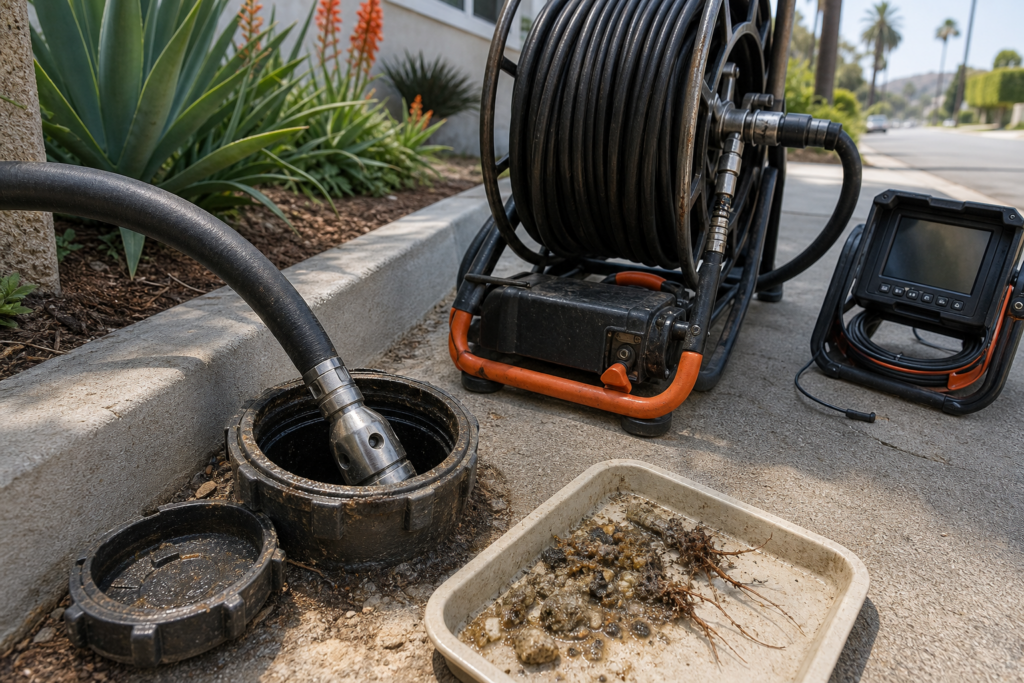
A sewer camera inspection can help identify visible defects, buildup, standing water, root entry, and changes in the pipe. The plumber can then decide whether cleaning is appropriate and select a plan that fits the line’s condition.
Warning Signs That the Line Should Be Checked
Do not wait for a planned maintenance date if the plumbing begins showing signs of a main-line restriction. Arrange an evaluation when you notice:
- Several drains slowing at the same time.
- Toilets gurgling when another fixture is used.
- Water rising in a shower or floor drain when a toilet flushes.
- Recurring sewer odors from multiple drains.
- A main-line blockage that returns after prior cleaning.
- Wastewater backing up at the lowest drain in the property.
One slow sink or shower may be a local drain problem rather than a sewer-line issue. Symptoms affecting several fixtures are more likely to involve a shared drain or the main line and deserve prompt attention.
If wastewater is actively backing up, stop using sinks, toilets, showers, washing machines, and dishwashers. Keep people and pets away from contaminated water and call a plumber. Do not remove a cleanout cap or attempt to open a pressurized blockage unless you are trained to do so safely.
Build a Condition-Based Maintenance Plan
A practical maintenance plan starts with evidence:
- Record the date and cause of each main-line blockage.
- Confirm whether the pipe is sound enough for hydro jetting.
- Document whether grease, scale, roots, or another material was present.
- Note how long the line remains clear after service.
- Recheck the line before the previously observed trouble interval, if the plumber recommends it.
- Adjust the plan when the pipe condition, household use, or blockage pattern changes.
This approach may lead to a shorter interval for a line with documented recurring buildup or no scheduled hydro jetting for a line that remains clear. It also helps separate maintenance problems from structural failures.
Questions to Ask Before Scheduling Hydro Jetting
Before approving the work, ask:
- What evidence shows that buildup is the cause?
- What type of material is restricting the line?
- Is the pipe in suitable condition for hydro jetting?
- Is there a crack, offset, belly, or collapse that needs repair?
- How quickly did the problem return after the last service?
- What symptoms should prompt another inspection?
- Should the line be checked again before the previous blockage interval?
Clear answers make it easier to choose a sensible maintenance window without paying for unnecessary service or waiting until sewage backs up.
Schedule a Sewer-Line Evaluation in Los Angeles
Papa’s Plumbing Inc. provides hydro jetting and sewer camera inspection for Los Angeles properties. Call (626) 243-3689 to have the line evaluated and discuss whether it needs cleaning now, condition-based maintenance later, or a repair instead.