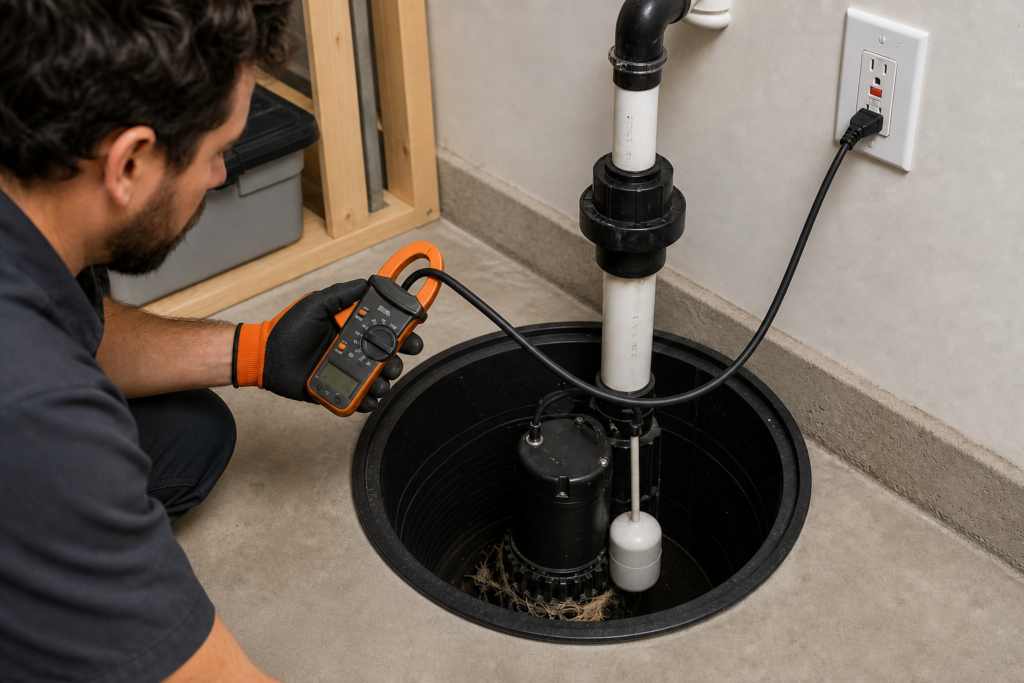




A sump pump may trip a circuit breaker or GFCI because current is escaping to ground, the motor is drawing more power than the circuit can safely carry, or the pump’s cord, plug, receptacle, or internal components are damaged. A jammed impeller, water inside an electrical connection, a failing motor, or an overloaded circuit can all produce a trip.
Do not keep resetting the breaker or GFCI to see whether it will hold. The protective device is interrupting power because it detected a condition that may damage the pump or create an electrical hazard. Repeated resets can energize wet or damaged equipment without resolving the cause.
If water is near the receptacle, cord connection, or electrical equipment, stay out of the area. Do not touch the pump, plug, outlet, or water. Disconnect power only from a dry, safely accessible location. If that is not possible, wait for a qualified professional.
Is the Circuit Breaker Tripping or the GFCI Tripping?
A circuit breaker and a ground-fault circuit interrupter protect against different conditions, although some devices combine both functions.
A standard breaker opens when the circuit carries excessive current. That can happen when a pump motor locks, an impeller cannot turn, the motor begins to fail, or the circuit is carrying other loads at the same time.
A GFCI compares current leaving and returning through the circuit. It trips when enough current appears to be taking an unintended path, such as through moisture, damaged insulation, a compromised cord, or an internal pump fault.
The location of the tripped device is useful information. Note whether a reset button has popped at the receptacle or whether a handle has moved in the electrical panel. Do not remove a cover or open the panel to investigate. Tell the service professional which device tripped and what the pump was doing immediately beforehand.
Why the Timing of the Trip Matters
Trip timing can narrow the inspection, but it does not prove the failed part.
If the device trips the instant the pump is plugged in, a cord, plug, receptacle, or internal electrical fault becomes more concerning. If it trips when the float rises and the motor tries to start, the motor may be drawing excessive starting current, or the impeller may be unable to turn.
If the pump starts and then trips after running for a short time, the motor may be overheating, the pump may be operating under an abnormal load, or a fault may appear only as components warm. A trip that occurs only after rain or rapid basin refill may reflect longer or more frequent run time rather than rain itself causing the electrical problem.
Record these details instead of forcing another test:
- Whether the basin water was low, rising, or near the top.
- Whether the motor started, hummed, ran normally, or stayed silent.
- How long the pump ran before power stopped.
- Whether water left through the discharge pipe.
- Whether the breaker or the receptacle reset button opened.
- Whether the same device powers anything else.
These observations help separate a pump-load problem from a receptacle or circuit problem.
Moisture or Damage at the Cord, Plug, or Receptacle
Sump-pump equipment operates near water, but its electrical connections still need to remain protected and in good condition. A damp receptacle, cracked plug body, pinched cord, missing insulation, loose connection, or water entering the pump can create a ground fault.
Inspect only from a dry location and without handling the equipment. Look for water staining below the receptacle, condensation, corrosion, a damaged cord jacket, scorch marks, a loose wall plate, or an extension cord. A visible problem is enough reason to leave the device off.
Do not dry a receptacle with a hair dryer, wrap a damaged cord with tape, move the plug to a non-GFCI outlet, cut off a ground pin, or use an extension cord as a workaround. Those actions can remove or defeat the protection that stopped the circuit.
A Jammed Intake or Impeller Can Overload the Motor
Water enters a submersible sump pump through intake openings near its base. Mud, gravel, string, roots, fibrous debris, or a shifted basin liner can restrict that intake or interfere with the impeller.
When the motor tries to turn a jammed impeller, it can draw high current and trip the breaker. You may hear a hum just before the power stops, but silence does not rule out a mechanical blockage.
Do not reach into the basin or lift the pump while it is connected to power. Do not pull the pump by its cord. A professional can isolate power, remove the unit safely, inspect the intake and impeller, and determine whether cleaning restores normal movement or the pump has been damaged.
If the pump runs without moving water and the circuit remains on, the symptom follows a different diagnostic path. Papa’s Plumbing has additional guidance for a sump pump that runs but does not pump water.
The Motor or Internal Seal May Be Failing
A pump can look normal from above while a motor winding, capacitor, internal connection, or seal is deteriorating. Water intrusion inside the pump may cause a GFCI trip. A worn or overheated motor may draw excessive current and open the breaker.
Possible warning signs include repeated humming, a burnt odor, unusual heat, grinding, intermittent starts, rust-colored residue, or trips that become more frequent. Stop using the pump if you notice smoke, sparks, a burning smell, or visible cord damage.
External appearance alone cannot confirm an internal fault. Proper diagnosis requires the pump to be safely isolated and tested under controlled conditions. Replacement may be appropriate when the sealed electrical assembly is compromised, but a trip does not automatically mean the entire pump must be replaced.
The Circuit May Be Shared or Unsuitable for the Load
A pump can trip a breaker even when the pump itself is not the only load. A freezer, dehumidifier, tool, or other equipment on the same circuit may push total current above the protective limit when the pump starts.
Do not unplug essential equipment at random or move the pump to another outlet for testing. An outlet on a different wall may still be on the same circuit, and an unprotected outlet may create additional risk.
Tell the technician what else lost power when the trip occurred. If inspection shows the pump is operating correctly but the receptacle, protective device, wiring, or branch circuit is at fault, a qualified electrician may need to evaluate that electrical work. Do not replace a breaker with a higher rating; the breaker size must match the wiring and approved circuit design.
Safe Steps to Take Right Away
Use only observations that do not require contact with wet or energized equipment:
1. **Stop resetting the protection.** One trip is enough to leave the pump off until the condition is understood. 2. **Stay on a dry surface.** Do not enter standing water or lean over a wet basin to reach a plug. 3. **Limit additional water.** Avoid draining large volumes into the area if household plumbing contributes to the basin. 4. **Check the water level from a safe distance.** Note whether it is stable or still rising. 5. **Identify the tripped device without opening anything.** Record whether the receptacle reset or panel breaker opened. 6. **Listen and note the sequence.** A hum, immediate stop, delayed trip, or silent pump provides useful context. 7. **Look for visible discharge trouble.** A frozen, crushed, disconnected, or blocked outlet can increase pump workload, but do not disassemble the line. 8. **Protect the property without touching electrical equipment.** Move dry belongings away from the area only if the path is safe. 9. **Arrange diagnosis before another water rise.** A pump without reliable power cannot protect the basin.
Routine inspection can reduce some mechanical problems before they cause a failure. Review Papa’s Plumbing’s sump-pump maintenance guidance for non-electrical maintenance planning, while leaving electrical faults to qualified diagnosis.
What Not to Do After a Trip
Do not bypass the GFCI, hold a reset button in place, install a larger breaker, or connect the pump through a power strip or extension cord. Do not splice, tape, or shorten the factory cord.
Do not remove the pump housing, open a receptacle, remove the electrical-panel cover, or probe wiring with a household meter. A meter reading is useful only when the person testing knows the circuit, equipment specifications, safe test method, and water exposure risks.
Do not assume a clear basin proves the pump is safe. Internal electrical damage may not be visible. Do not assume a tripped breaker proves the circuit is defective, either; a locked pump motor can cause the protective device to work exactly as intended.
If another person already added chemical cleaner, fuel, or another hazardous material near the basin, disclose that before anyone handles the water or equipment.
What a Sump-Pump Diagnosis Includes
A condition-led inspection starts with the exact trip sequence and the state of the basin. With power safely isolated, the plumber may inspect the float, intake, impeller access, discharge route, check valve, pump cord, plug, and signs of water intrusion or overheating.
The pump can then be evaluated against its condition and operating requirements without defeating the protective device. If the pump is mechanically jammed, the inspection determines whether debris removal is safe and sufficient. If the motor, sealed housing, cord, or internal electrical assembly is compromised, replacement may be safer than another reset.
When the pump and plumbing check out but the receptacle or circuit does not, the next step is electrical evaluation. Separating those two systems prevents unnecessary pump replacement and avoids treating a wiring problem as a plumbing repair.
Papa’s Plumbing provides sump-pump repair and replacement in Los Angeles for pump, basin, float, intake, and discharge problems. The observed trip details help determine what should be checked first.
Request Sump-Pump Service Before the Water Rises Again
Leave the pump off if the breaker or GFCI will not stay set, the cord or receptacle is wet or damaged, the motor hums without starting, or the trip returns when the float calls for the pump. Keep clear of the basin if water is approaching electrical equipment.
Contact Papa’s Plumbing and describe which protective device tripped, when it happened, whether the motor started, whether water moved through the discharge pipe, and whether the basin level is rising. Those details support a safer, faster distinction between a jammed or failing pump and a condition that needs electrical evaluation.