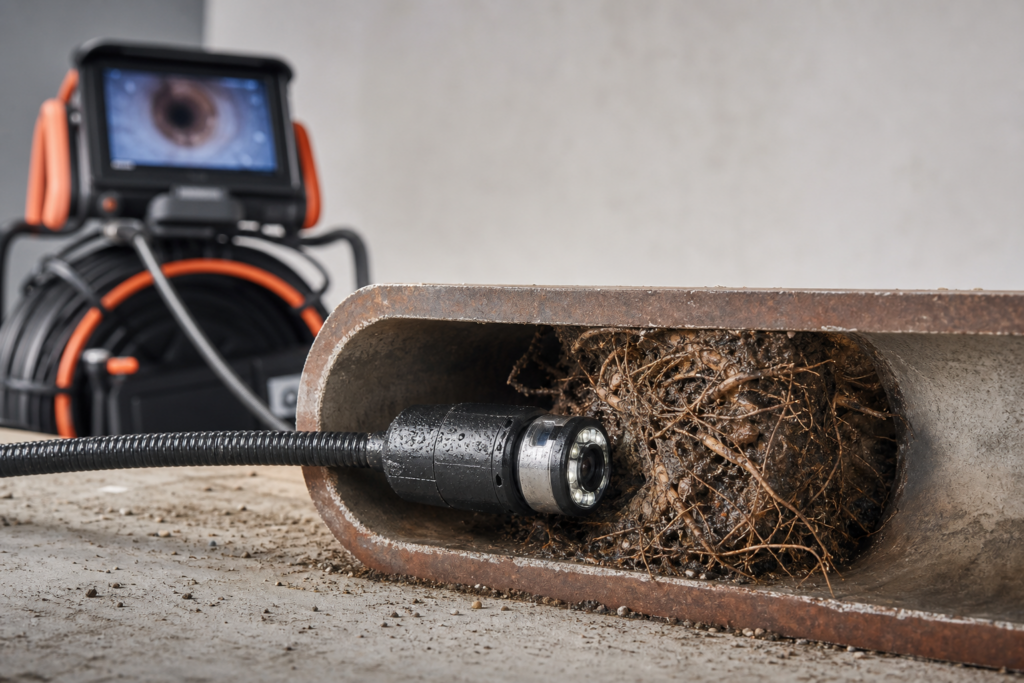




A sewer camera can stop when roots, compacted waste, heavy buildup, a foreign object, an offset joint, or a damaged pipe section leaves too little room for the camera head to advance. The footage may show what is blocking the immediate path, but it cannot reveal the condition of the sewer line beyond that point.
A stopped camera does not automatically mean the inspection found a collapsed pipe or that the line needs replacement. It means the visible run is incomplete. The obstruction should be documented and located, then cleared or accessed with a method suited to the pipe’s condition. Once a passage is open, the camera can be run again to inspect the previously hidden section.
That second look matters. The obstruction may be removable material, or it may be collecting around a crack, root opening, offset joint, belly, or other structural defect. A repair decision should follow the complete findings, not the first point of resistance.
Why a Sewer Camera May Stop
A sewer camera needs enough open space to travel through the line. Several conditions can narrow or close that path:
- Dense roots can grow through a joint and form a mass that catches paper and waste.
- Grease, soap residue, mineral scale, and other buildup can gradually reduce the usable pipe opening.
- Wipes, paper, debris, or a foreign object can become compacted into a solid obstruction.
- An offset joint can create a ledge or opening too small for controlled camera passage.
- A cracked or deformed section can change the pipe’s shape.
- A badly damaged or collapsed section can close the route entirely.
The image at the stopping point may suggest one of these conditions, but the view can be limited. Waste, dark water, grease, roots, or debris may cover the pipe wall and hide the exact condition underneath. The camera may show the obstruction without showing why it formed.
That distinction is important. Removing the visible material may solve an isolated blockage. If the material accumulated because the pipe is damaged or poorly aligned, flow can improve after cleaning while the underlying defect remains.
What the Stopped Footage Can Show
A recorded camera run preserves useful evidence even when the camera cannot reach the full length of the sewer lateral. Depending on visibility, the footage may show:
- The type and condition of the pipe leading to the obstruction.
- Cracks, roots, scale, grease, debris, or standing water in the visible section.
- Whether the usable opening narrows gradually or ends at a concentrated obstruction.
- The camera’s approximate stopping location when the head can be located from the surface.
- A visible joint, material transition, or change in pipe alignment near the stopping point.
- Whether the same obstruction remains after an attempted clearing.
A sewer camera inspection can also help document whether several visible problems are present at once. Roots may surround a shifted joint. Waste may collect in standing water. Scale may narrow an older pipe before the camera reaches a more severe blockage.
The plumber should connect each recommendation to an observed condition. The footage is most useful when the stopping point is recorded, located, and compared with the results after the line has been cleared.
What the Camera Cannot Prove Yet
A camera that stops at a blockage cannot show the pipe beyond it. That means the first run usually cannot establish:
- How long the obstruction extends.
- Whether the downstream pipe is open, cracked, offset, sagging, or collapsed.
- Whether another blockage exists farther along the lateral.
- Whether the visible material is the main cause or the result of another defect.
- Whether the entire obstruction can be removed with one cleaning method.
- Whether a repair is necessary and, if so, how much pipe is affected.
Resistance alone is not a complete diagnosis. A camera may stop at compacted removable material even when the pipe beyond it is sound. It may also stop before a structural defect that cannot be evaluated until the obstruction is cleared.
Standing water creates another limitation. If the lens is submerged or the water is too cloudy, the bottom and sides of the pipe may disappear from view. The plumber may need to restore flow and repeat the run before interpreting the apparent depth or condition of that section.
What Should Happen Next?
The safest next step depends on whether wastewater is actively backing up and what the visible footage shows.
First, Reduce Wastewater Entering the Line
If toilets, tubs, showers, or floor drains are backing up, stop using plumbing fixtures and water-using appliances. Continued use can send more wastewater toward a line that cannot carry it away.
Keep people and pets away from contaminated water. Do not remove a cleanout cap or attempt to release a pressurized blockage. A plumber can determine the safest access point and check whether wastewater is being held behind the obstruction.
Record and Locate the Stopping Point
The initial footage should be saved before clearing begins. The plumber can note how far the camera traveled, identify visible landmarks inside the pipe, and use locating equipment when the camera head can be tracked from above ground.
Locating the obstruction helps connect the underground finding with the property. It may show whether the stopping point is beneath soil, concrete, a driveway, a building area, or another access constraint. That information matters if cleaning does not restore a usable passage.
Choose a Clearing Method That Fits the Evidence
A plumber may recommend professional drain cleaning when the visible condition appears to be removable material. A cable machine may open a path through some blockages. Hydro jetting may remove suitable grease, scale, roots, or other buildup when the pipe is in condition for that method.
No single method fits every stopped camera run. A severely offset, deformed, or collapsed section is different from a mass of roots or compacted waste. The pipe material, visible condition, access, and resistance all affect the next move.
The immediate goal is not to force the camera farther. It is to create enough safe access to inspect the hidden section and determine why the blockage formed.
Run the Camera Again After Clearing
The post-clearing camera run is the most important follow-up step. Once flow and camera access are restored, the plumber can inspect the area that was previously hidden and continue toward the sewer connection when conditions permit.
The second run may show that the obstruction was isolated and the surrounding pipe remains open. It may instead reveal root entry, an offset joint, cracking, a low section holding water, or another defect that contributed to the blockage.
Comparing the before-and-after footage also helps answer whether the cleaning removed the obstruction or only opened a narrow passage through it. If substantial material remains, another cleaning step or a different approach may be needed before the pipe can be evaluated reliably.
Base Any Repair on the Complete Findings
Structural work should be tied to a visible and located defect. If the cleared line shows a cracked, collapsed, severely offset, or poorly graded section, sewer line repair and replacement may be considered based on the affected pipe and property conditions.
The repair boundary and method should follow what the completed inspection shows. A localized defect may call for a focused repair. Broader deterioration may require a different approach. A blockage that clears without evidence of structural damage should not be treated as automatic proof that the sewer line needs replacement.
Questions to Ask After a Camera Stops
Clear answers can help you understand whether the next recommendation is for cleaning, further diagnosis, or repair:
- What is visible at the point where the camera stopped?
- Was the camera head located from the surface?
- Could water or debris be hiding the pipe wall?
- Does the footage show a removable obstruction, structural damage, or an uncertain condition?
- Which clearing method fits the visible pipe condition, and why?
- Will the camera be run again after a passage is opened?
- Did the second run reach and inspect the previously hidden section?
- Is any repair recommendation tied to a visible and located defect?
- Does the footage show why the blockage developed or only where it stopped the camera?
The first run may identify the immediate obstruction. The second run should provide the evidence needed to understand the line beyond it.
Schedule a Sewer Camera Inspection in Los Angeles
If your Los Angeles home has recurring backups, several slow fixtures, or a prior camera run that could not get past an obstruction, contact Papa’s Plumbing Inc. The plumbing team can document and locate the stopping point, explain what the footage can and cannot establish, and determine whether the line needs cleaning, another diagnostic step, or a focused repair.