



Gas lines are the one part of your Los Angeles home’s plumbing system where a problem isn’t just expensive — it’s dangerous. A leaking gas line can cause fire, explosion, carbon monoxide exposure, and evacuations. Despite the risk, most homeowners know almost nothing about their gas lines — where they run, what material they’re made of, or how to recognize a problem before it becomes a crisis. Here’s what you need to know.
How Gas Lines Work in LA Homes
Natural gas enters your property from the SoCalGas main through a meter at the side of the house. From the meter, a gas supply line runs to every gas appliance — your furnace, water heater, stove, dryer, fireplace, and outdoor grill if it’s plumbed. These branch lines are typically black iron pipe in older homes or corrugated stainless steel tubing (CSST) in newer construction or renovations.
Everything from the meter to your appliances is the homeowner’s responsibility to maintain. Southern California Gas Company maintains the supply up to the meter — everything past it is yours.
In older Los Angeles homes — particularly those built before the 1980s — the gas lines are rigid black iron pipe with threaded fittings. These pipes are durable but can corrode over decades, particularly in areas with moisture exposure or where the pipe passes through concrete. The threaded joints can develop small leaks as the pipe material fatigues and the thread sealant deteriorates.
Signs of a Gas Leak
The most obvious sign is the smell. Natural gas is odorless in its raw state, but SoCalGas adds mercaptan — a sulfur compound — to give it a distinctive rotten-egg smell. If you smell that odor in your home, garage, or yard, treat it as a gas leak until proven otherwise.
Other signs include a hissing sound near a gas line or appliance, dead or dying vegetation in a concentrated area of your yard (indicating an underground gas line leak), higher-than-expected gas bills with no change in usage, and a pilot light that repeatedly goes out on your water heater or furnace.
Physical symptoms of gas exposure include headaches, dizziness, nausea, and fatigue — particularly if these symptoms improve when you leave the house and return when you come home.
What to Do If You Suspect a Gas Leak
This is not a situation where you troubleshoot. If you smell gas or suspect a gas leak, leave the house immediately. Don’t flip light switches, use your phone inside the house, or start your car in the garage — any spark can ignite gas that’s accumulated in an enclosed space.
Once you’re safely outside, call SoCalGas at 1-800-427-2200 to report the leak. If you smell gas strongly or hear hissing, also call 911. SoCalGas will dispatch a technician to locate the leak and shut off gas to the affected area if necessary.
After the immediate hazard is secured, you’ll need a licensed plumber to perform the actual gas line repair. SoCalGas identifies the leak — they don’t repair customer-owned gas lines.
Common Gas Line Repairs in Los Angeles Homes
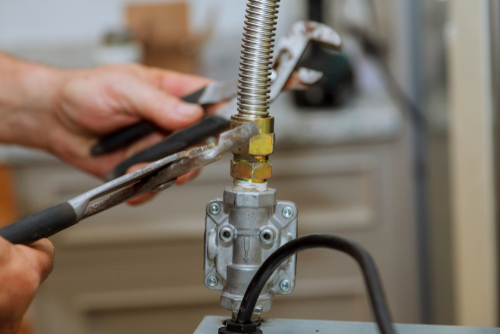
The most frequent gas line repairs in LA homes involve corroded fittings and joints on black iron pipe, particularly in garages and crawl spaces where moisture is present. Replacing a corroded fitting or a short section of damaged pipe is a relatively straightforward repair for a licensed plumber, but it requires pressure testing the entire system afterward to confirm no other leaks exist.
Gas line connections to appliances also need attention during appliance replacements. When you install a new water heater, stove, or dryer, the gas connection must be made by a licensed professional. Flexible gas appliance connectors have a limited lifespan and should be replaced — not reused — when the appliance is swapped.
Homes undergoing renovation or addition work may need new gas lines extended to additional appliances or rooms. Running a new gas branch from the meter to a relocated kitchen or an outdoor cooking area requires proper sizing to ensure adequate gas flow to all appliances, plus permits and inspection from the City of Los Angeles Department of Building and Safety.
The California Plumbing Code requires that all gas line work be performed by a licensed contractor and that the system pass a pressure test and inspection before gas service is restored. This is non-negotiable — gas work without permits and inspection is a code violation and an insurance liability.
Gas Line Upgrades for Tankless Water Heaters
One of the most common reasons Los Angeles homeowners need gas line work is upgrading to a tankless water heater. A standard tank water heater uses approximately 40,000 BTUs. A whole-house tankless unit can require 150,000 to 200,000 BTUs — which often means the existing 1/2-inch gas line from the meter is undersized.
Upgrading the gas supply for a tankless installation involves running a larger-diameter line from the meter to the new unit location. In some cases, the gas meter itself needs to be upsized by SoCalGas to deliver adequate flow. Your plumber coordinates with SoCalGas on meter upgrades as part of the installation process.
If you’re considering a tankless upgrade, we’ve detailed the full decision-making process — including gas line requirements — in our posts on tankless water heater installation in Glendale and the broader tankless vs traditional comparison.
Don’t Ignore Gas Line Warning Signs
Gas leaks don’t fix themselves, and they don’t stay small forever. A minor leak at a corroded fitting today can worsen under thermal cycling, vibration from nearby appliances, or seismic activity. If you’ve noticed the smell of gas — even faintly, even intermittently — get it checked.
Contact Papa’s Plumbing for gas line inspection, repair, and installation throughout the Los Angeles area. We serve homeowners in Glendale, Sherman Oaks, Tujunga, Encino, and all surrounding neighborhoods. Licensed, permitted, pressure-tested — the right way, every time.